Web scraping has evolved from a niche technical skill into a billion-dollar industry powering business intelligence, AI development, and competitive strategy across sectors. Whether you are evaluating scraping tools, building a business case for automated data collection, or researching the market, having accurate statistics is essential.
This comprehensive guide compiles the most current web scraping statistics for 2026, sourced from industry reports by Mordor Intelligence, Straits Research, Grand View Research, and other authoritative sources. Bookmark this page as your reference for web scraping market data.
Web Scraping Market Size and Growth
The web scraping market has crossed the billion-dollar threshold and continues expanding rapidly as more organizations recognize the value of automated data collection.
Current Market Size (2025-2026)
| Source | 2025 Estimate | 2026 Projection |
|---|---|---|
| Mordor Intelligence | — | $1.03 billion |
| Straits Research | $718.86 million | $814.4 million |
| Market.us | $754.17 million | — |
| Browsercat / Industry Reports | $1.01 billion | — |
| TechSci Research | — | $1.08 billion |
The variation in estimates reflects different methodologies: some reports focus narrowly on scraping software, while others include the broader data extraction services market.
Growth Projections Through 2030
The market is projected to double or triple over the next five to seven years:
- ** $2.00 billion by 2030 ** (Mordor Intelligence, 14.2 % CAGR from 2025 - 2030)
- ** $2.49 billion by 2032 ** (Industry aggregate, 11.9 % CAGR)
- ** $2.87 billion by 2034 ** (Market.us, 14.3 % CAGR)
The consistent double - digit compound annual growth rates across all forecasts indicate strong sustained demand for web scraping technology.
AI-Driven Web Scraping Market
The AI-powered segment of web scraping is growing even faster:
- 17.8% CAGR for AI-driven web scraping solutions
- $3.3 billion projected sales for AI-driven scraping by 2032
- 30-40% time savings reported by companies using AI-powered scraping vs. traditional methods
- Up to 99.5% accuracy rates achieved with AI extraction on complex content
- 30-40% time savings reported by companies using AI-powered scraping vs. traditional methods
- $3.3 billion projected sales for AI-driven scraping by 2032
Tools like Lection exemplify this AI-native approach, using intelligent agents to understand page structures rather than relying on brittle CSS selectors that break when websites change.
Adoption Statistics by Industry
Web scraping has become essential infrastructure across multiple industries, with some sectors achieving near - universal adoption.
Industry Adoption Rates
| Industry | Adoption Rate | Primary Use Cases |
|---|---|---|
| E-commerce | 82% | Price monitoring, competitor analysis, inventory tracking |
| Financial Services / Hedge Funds | 68% revenue share in alt-data | Alpha generation, market signals, sentiment analysis |
| Investment Professionals | 36% | Market research, due diligence, trend analysis |
| Real Estate | 3% + of all API requests | Property valuations, market trends, listing aggregation |
E-commerce Leads Adoption
E-commerce represents approximately 25% of total web scraping market share. The industry's reliance on competitive intelligence and dynamic pricing makes automated data collection essential rather than optional.
Common e-commerce scraping applications include:
- Price monitoring: Tracking competitor pricing in real-time
- Product catalog analysis: Comparing features, specifications, and availability
- Customer sentiment analysis: Aggregating reviews across platforms
- Inventory monitoring: Tracking stock levels and availability signals
- Customer sentiment analysis: Aggregating reviews across platforms
- Product catalog analysis: Comparing features, specifications, and availability
Financial Services and Alternative Data
The alternative data market, which relies heavily on web-scraped information, reached $11.65 billion in 2025 according to Grand View Research. Other estimates place the market between $2.5 billion and $18.7 billion depending on scope.
Key financial sector statistics:
- 68% of alternative data market revenue comes from hedge fund operators
- 85% of market-leading hedge fund managers use two or more alternative datasets
- Over 50% of all hedge fund managers utilize alternative data
- 33% year-over-year growth in alternative data spending in 2025
- Web-scraped datasets are described as the "dominant force" in alternative data for investment management
- 33% year-over-year growth in alternative data spending in 2025
- Over 50% of all hedge fund managers utilize alternative data
- 85% of market-leading hedge fund managers use two or more alternative datasets
The alternative data market is projected to reach $135.72 billion by 2030 (63.4% CAGR), indicating massive growth in data-driven investment strategies.
Technology and Tools Statistics
Understanding which technologies power web scraping helps predict where the industry is heading.
Programming Language Preferences
** Python dominates web scraping development:**
- ** ~70 % of developers ** use Python for web scraping projects
- ** BeautifulSoup ** holds approximately 43.5 % usage share among Python parsing libraries
- ** Scrapy ** has accumulated over 82 million downloads as the world's most-used open-source extraction framework
- ** BeautifulSoup ** holds approximately 43.5 % usage share among Python parsing libraries
Framework and Library Usage
| Tool | Type | Typical Use Case |
|---|---|---|
| BeautifulSoup | Parsing Library | Simple HTML parsing, prototyping |
| Scrapy | Framework | Large - scale crawling, data pipelines |
| Selenium | Browser Automation | JavaScript - heavy sites, testing |
| Playwright | Browser Automation | Modern SPAs, cross - browser support |
| Puppeteer | Browser Automation | Chrome - based scraping, rendering |
Deployment Models
** Cloud - based scraping dominates:**
- ** 68 % of the web scraping market ** uses cloud deployment models
- ** 17.2 % CAGR ** growth projected for cloud - based scraping
- ** 32 %** remains on - premise or local deployments
- ** 17.2 % CAGR ** growth projected for cloud - based scraping
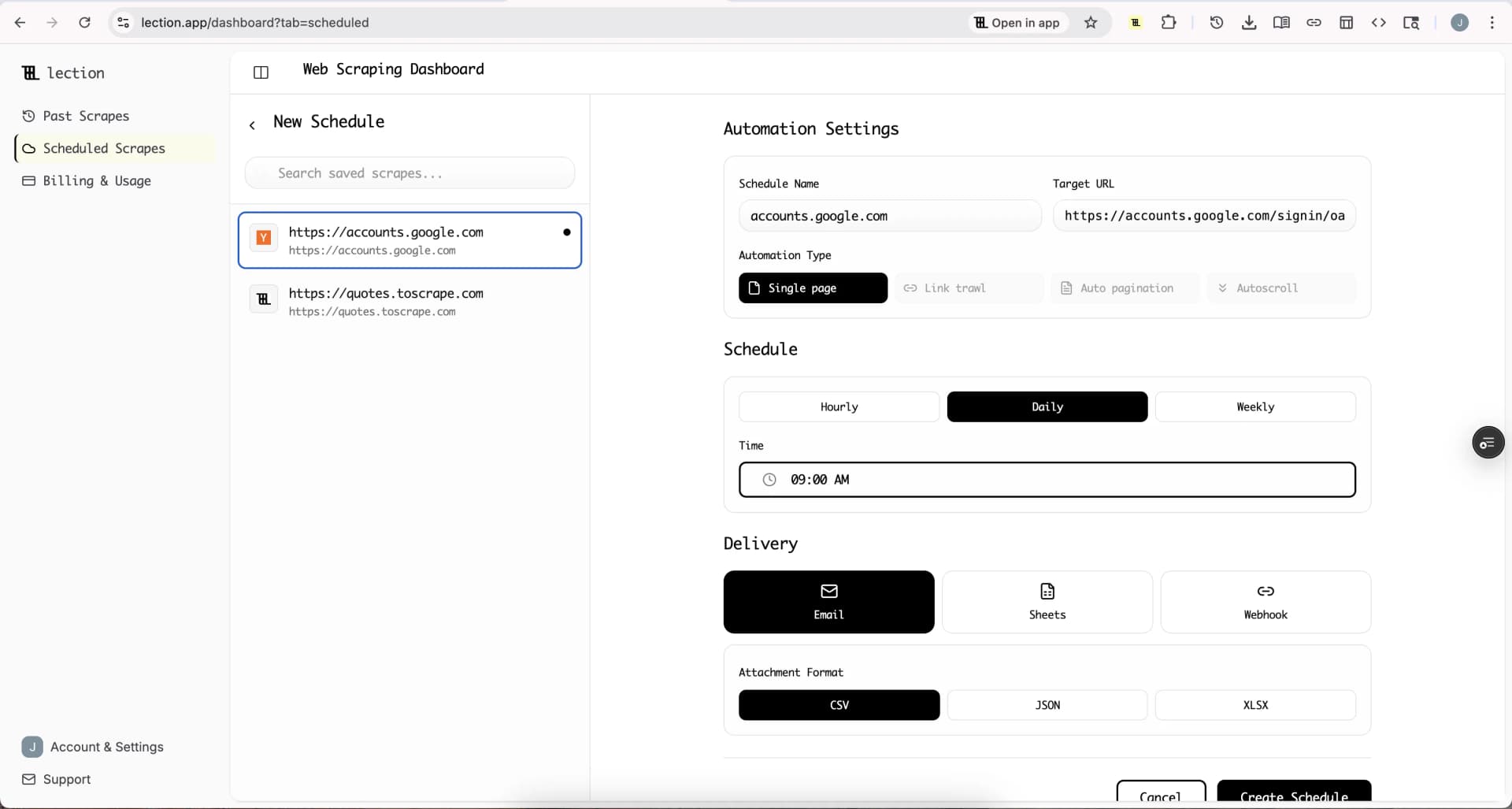
Cloud scraping's advantages include scalability, IP rotation capabilities, and the ability to run extractions 24/7 without local infrastructure. Lection's cloud scraping feature enables scheduled extractions that run automatically, delivering data directly to Google Sheets or other destinations.
Regional Market Distribution
Web scraping adoption varies significantly by geography, with distinct regional leaders and growth patterns.
Regional Market Share(2024)
| Region | Market Share | Notes |
|---|---|---|
| North America | 34 - 45 % | Largest market, mature infrastructure |
| Europe | ~30 % | Second largest, GDPR considerations |
| Asia - Pacific | ~20 % | Fastest growing(18 % CAGR) |
North America Leads
North America holds approximately ** 34.5 % to 45 %** of the global web scraping market, depending on the source.This dominance stems from:
- Mature digital infrastructure and cloud adoption
- Strong AI and machine learning ecosystems
- Robust e - commerce sector
- High concentration of data - driven enterprises
- Robust e - commerce sector
- Strong AI and machine learning ecosystems
Asia - Pacific Shows Fastest Growth
The Asia - Pacific region is projected to grow at an ** 18 % CAGR through 2030 **, the fastest of any region.Growth drivers include:
- Rapid digital transformation in India, China, and Southeast Asia
- Booming e - commerce markets
- Expanding AI adoption
- Significant investment in data - driven industries
- Expanding AI adoption
- Booming e - commerce markets
China currently holds the largest share within Asia - Pacific, while India is expected to register the highest growth rate.
European Market Considerations
Europe accounts for approximately ** 30 %** of the global market.While adoption is strong, [GDPR and other privacy regulations](/blogs/web - scraping - legality - by - country - 2025) create additional compliance considerations for scraping projects involving personal data.
Use Cases and Applications
Web scraping serves diverse purposes across business functions and research applications.
Most Common Use Cases
Data from industry surveys reveals the top applications:
- ** Competitive Intelligence ** - Monitoring competitor pricing, features, and positioning
- ** Price Monitoring ** - Dynamic pricing strategies based on market conditions
- ** Lead Generation ** - Building prospect lists from public business data
- ** Market Research ** - Trend analysis, sentiment tracking, product research
- ** Content Aggregation ** - Collecting and synthesizing information across sources
- ** Academic Research ** - Data collection for social science, economics, and policy studies
Most Scraped Target Categories(2024)
Based on web scraping API request data from Q1 2024:
| Category | Share of Requests |
|---|---|
| Search Engines | 42 % + |
| Social Media | 27 % + |
| E - commerce | Significant |
| Real Estate | 3 % + |
Search engines and social media together account for nearly ** 70 % of all scraping requests **, reflecting the value of search ranking data and social signals for marketing and research applications.
AI and Machine Learning Applications
** 65 % of enterprises ** using web scraping do so to feed AI and machine learning initiatives.Scraped data powers:
- Training datasets for machine learning models
- Real - time inputs for predictive analytics
- Sentiment analysis and natural language processing
- Computer vision training data
- Large language model fine - tuning
- Computer vision training data
- Sentiment analysis and natural language processing
- Real - time inputs for predictive analytics
The connection between web scraping and AI development continues strengthening as model training requires ever - larger datasets.
Technical Performance Benchmarks
Performance statistics help set expectations for scraping projects.
AI vs.Traditional Scraping Performance
| Metric | AI - Powered Scraping | Traditional Scraping |
|---|---|---|
| Time Efficiency | 30 - 40 % faster | Baseline |
| Accuracy(complex content) | Up to 99.5 % | Variable |
| Maintenance Overhead | Lower(adaptive) | Higher(brittle selectors) |
| Setup Complexity | Often simpler | Often requires coding |
AI - powered tools adapt to website changes automatically, reducing the maintenance burden that traditionally consumes significant developer time.
Scrapy vs.BeautifulSoup Benchmarks
For developers choosing between Python frameworks:
- Scrapy can be ** up to 39x faster ** than synchronous BeautifulSoup approaches for large - scale projects
- BeautifulSoup is preferred for quick prototyping and learning
- Scrapy's asynchronous architecture handles thousands of concurrent requests efficiently
- Combination approaches use both: Scrapy for crawling, BeautifulSoup for parsing
- Scrapy's asynchronous architecture handles thousands of concurrent requests efficiently
- BeautifulSoup is preferred for quick prototyping and learning
Legal and Compliance Context
Understanding the legal landscape is essential for responsible scraping.For comprehensive analysis, see our[web scraping legality guide](/blogs/web - scraping - legality - by - country - 2025).
Key Legal Developments
The[hiQ Labs v.LinkedIn case](/blogs/hiq - labs - vs - linkedin -case -explained) established important precedent in the United States:
- ** Publicly accessible data ** generally does not trigger Computer Fraud and Abuse Act(CFAA) liability
- ** Terms of service violations ** may still create civil liability
- ** Privacy regulations ** (GDPR, CCPA) apply independently to personal data collection
- ** Terms of service violations ** may still create civil liability
Ethical Considerations
[Robots.txt compliance](/blogs/complete - guide - to - robots - txt -for-web - scrapers) remains an important ethical consideration, even where not legally required.Browser - based tools likeLection that extract data you can already see align naturally with the principle of accessing only publicly available information.
Future Projections and Trends
Several trends are shaping the future of web scraping.
Emerging Technologies
- ** LLM - Powered Extraction ** - Large language models understanding semantic content rather than relying on structural selectors
- ** Multimodal Scraping ** - Extracting data from images, video, and audio alongside text
- ** Real - Time Data Streams ** - Moving from batch extraction to continuous data feeds
- ** No - Code Democratization ** - Visual tools making scraping accessible to non - developers
Market Trajectory
Conservative projections place the web scraping market at ** $2 billion by 2030 **.The AI - driven segment may reach ** $38.4 billion by 2034 ** according to some estimates, reflecting the expanding role of web data in powering intelligent systems.
Integration Trends
Modern scraping increasingly integrates with:
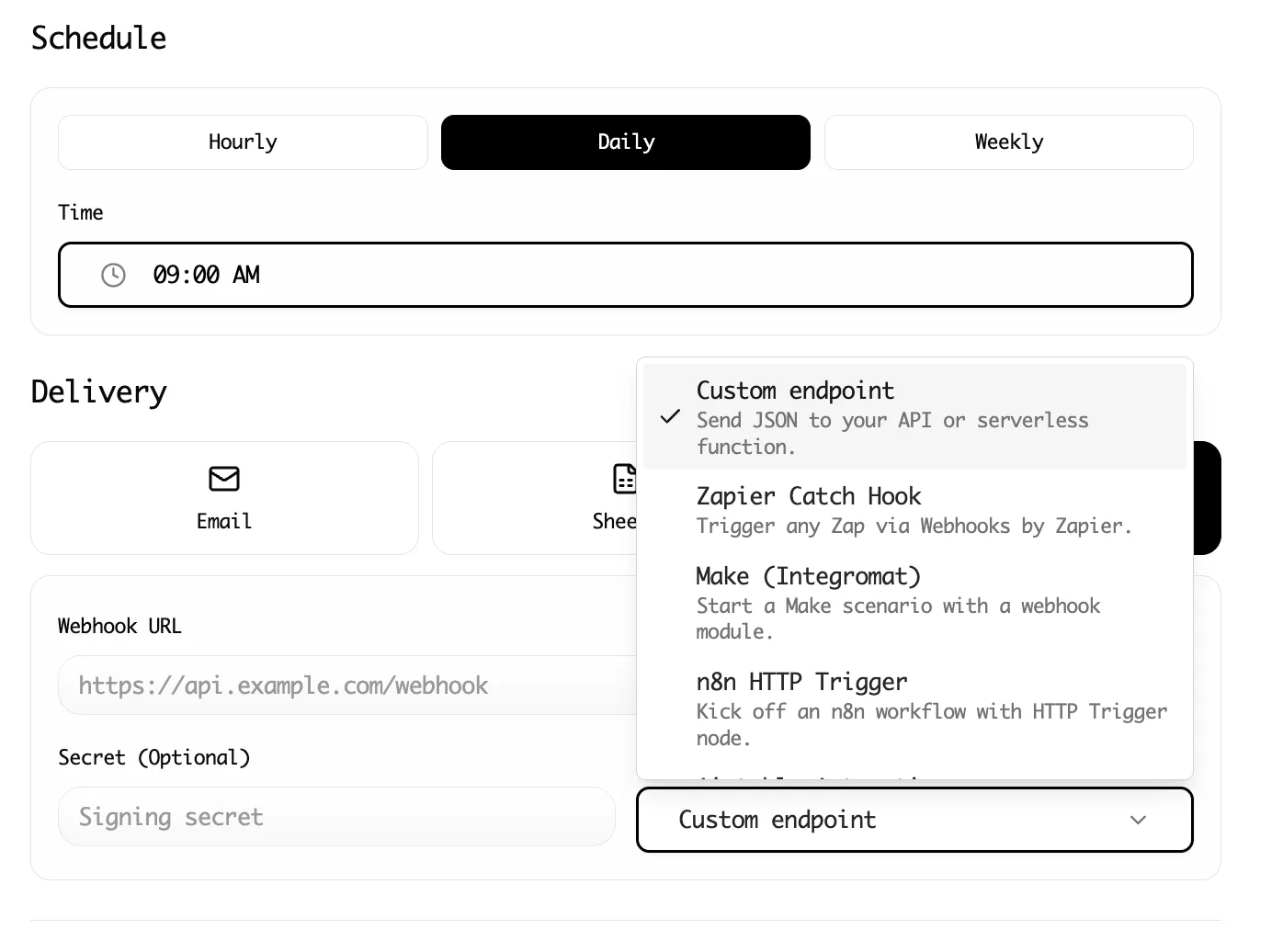
- ** Automation platforms ** like[Zapier](/blogs/connect - web - scraping - to - zapier - beginner - guide), [Make](/blogs/get - web - data - into - make - workflows), and n8n
- ** Productivity tools ** like[Notion](/blogs/send - scraped - data - to - notion - automatically) and[Google Sheets](/blogs/amazon - product - data - to - google - sheets)
- ** CRM systems ** for lead enrichment and sales intelligence
- ** Data warehouses ** for business analytics
- ** CRM systems ** for lead enrichment and sales intelligence
- ** Productivity tools ** like[Notion](/blogs/send - scraped - data - to - notion - automatically) and[Google Sheets](/blogs/amazon - product - data - to - google - sheets)
Key Takeaways
The web scraping industry in 2026 is characterized by:
- Market maturity: The industry has crossed $1 billion and continues growing at 14%+ annually
- AI transformation: AI-powered scraping delivers 30-40% time savings with near-perfect accuracy
- Cloud dominance: 68% of deployments are cloud-based, enabling 24/7 automation
- Enterprise adoption: 82% of e-commerce companies and 68% of hedge fund alternative data spending involves web scraping
- Python leadership: Nearly 70% of developers choose Python, with Scrapy and BeautifulSoup as dominant tools
- Regional growth: Asia-Pacific growing fastest at 18% CAGR while North America maintains market leadership
For organizations evaluating web scraping solutions, these statistics underscore the importance of choosing tools that align with industry trends: AI-native, cloud-enabled, and integration-ready.
Ready to start collecting web data? Install Lection and experience AI-powered extraction directly in your browser.