Most teams do not get in trouble with web scraping because the extraction failed. They get in trouble because the workflow succeeded, spread across the business, and nobody stopped to ask whether the collection method matched the purpose.
That is what makes ethics a practical issue, not a branding exercise. The spreadsheet arrives. A teammate syncs it into a CRM. A manager asks where the data came from, whether the people involved would expect this use, and what happens if part of the dataset is wrong. If the only answer is "it was public," the project is already on weak footing.
Ethical scraping gives you a better standard. It helps you decide what not to collect, when to slow down, and how to build a process your team can explain without improvising. That matters whether you scrape competitor prices, public company pages, job listings, directories, or social content.
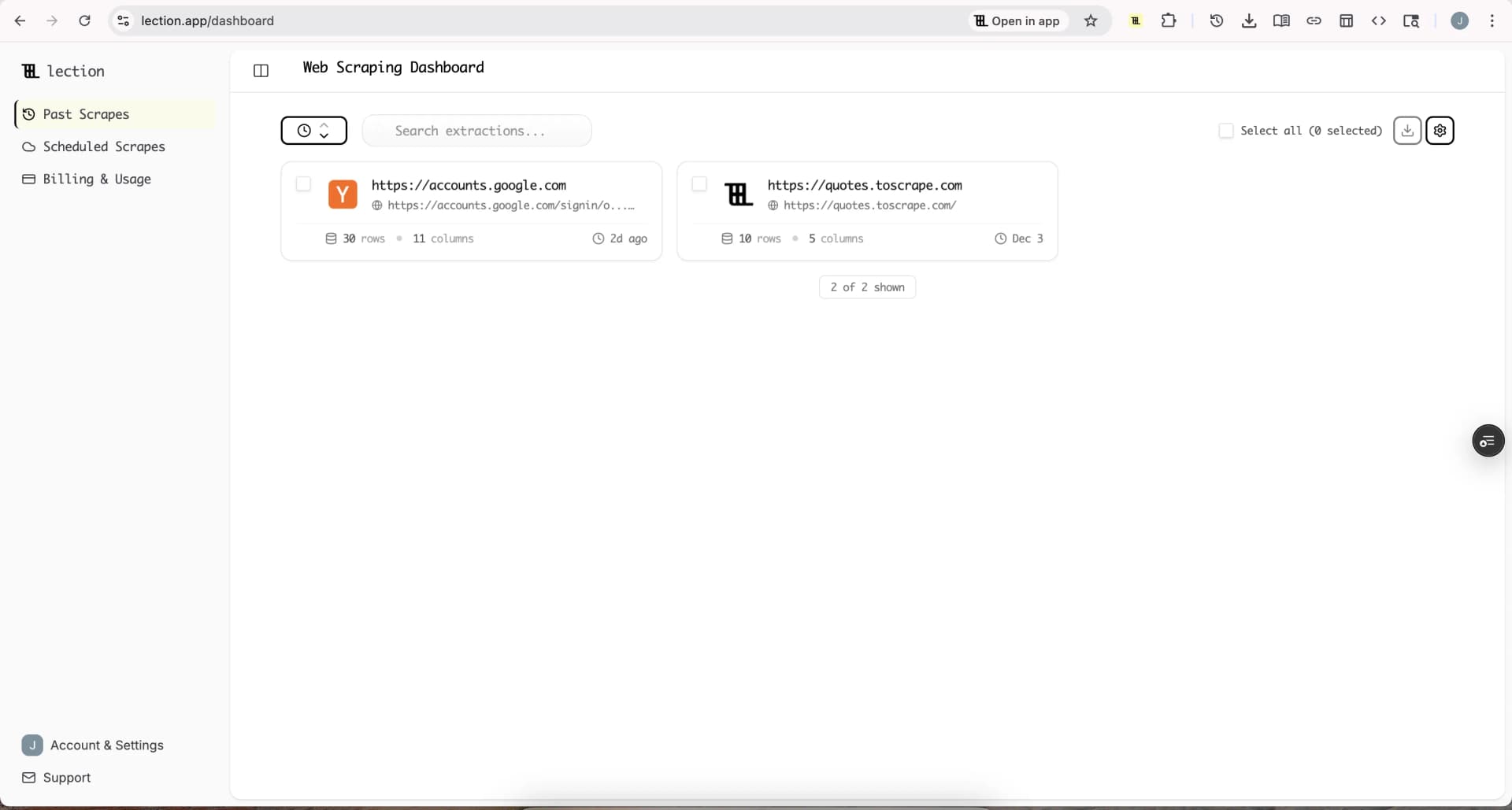
Lection is the AI-native option for fast, accurate scraping right in your browser. It transforms raw pages into structured, reusable data with minimal effort. That speed is useful only when the workflow around it is disciplined. Ethical scraping is the discipline that keeps a useful dataset from becoming a messy liability.
If you need the legal baseline first, start with Web Scraping Legality by Country. If you want to understand one of the clearest public site signals, pair this guide with the Complete Guide to robots.txt for Web Scrapers.
What ethical web scraping actually means
Ethical scraping is not the same as "never scrape anything sensitive" or "always ask permission first." In practice, it means making collection choices that are proportionate, explainable, and respectful of the people and systems affected by them.
That starts with a simple question: if you had to explain the workflow to the site owner, a customer, or your own legal team, would the explanation sound thoughtful or evasive?
An ethical process usually has the same shape:
- a narrow business purpose
- a limited field set
- collection at a reasonable pace
- a clear review path for personal or sensitive data
- a way to correct, delete, or stop when the facts change
Those controls are what separate routine market research from a scraping project that quietly creates reputational risk.
Why does the standard approach fail?
The usual scraping workflow is optimized for speed, not judgment. That is why it breaks down as soon as the dataset becomes valuable.
Legality becomes the only question
Teams often ask whether scraping is legal and stop there. That matters, but it is not enough. A workflow can sit inside a plausible legal argument and still be careless, excessive, or hard to defend.
For example, collecting a small set of public product prices for pricing analysis is different from collecting every visible field on thousands of public profiles because those fields might become useful later. The second project creates broader privacy, data quality, and trust problems even before anyone argues about statutes or case law.
Teams collect more than they can explain
Overcollection happens because the marginal cost of "one more field" looks close to zero. If the scraper can capture profile photos, follower counts, personal bios, and timestamps, someone eventually asks for them.
The trouble appears later. Extra fields expand retention problems, widen access, complicate deletion, and make downstream use harder to justify. If you have already seen this pattern in your own work, the GDPR Compliance Checklist for Data Scrapers shows how fast a loose field list becomes a governance issue.
Automation hides downstream impact
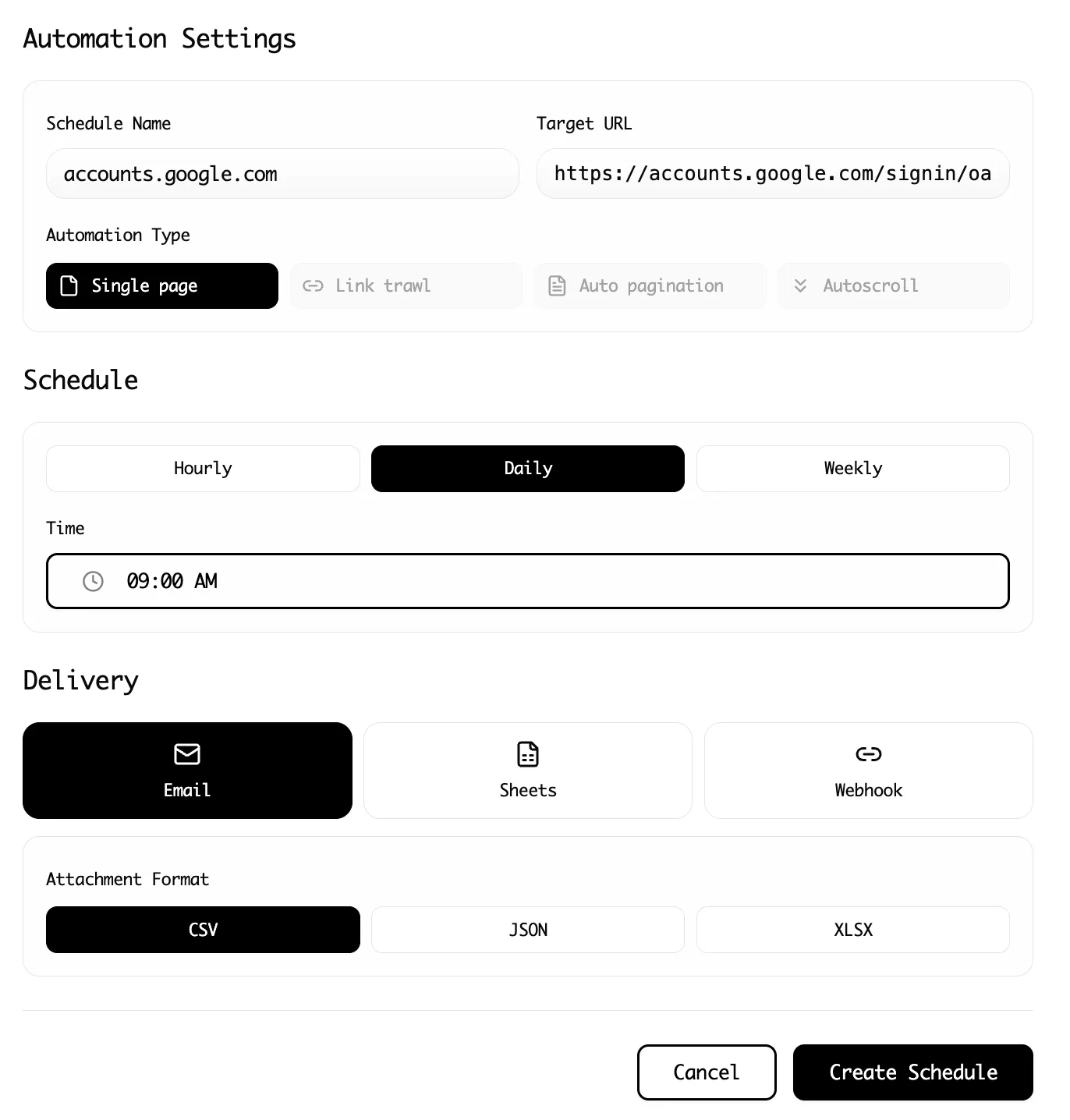
An extraction rarely stays local. It moves into Sheets, a CRM, Airtable, Notion, or an internal dashboard. Once that happens, every weak decision made at collection time gets amplified by automation.
That is why ethical scraping is not only about the request itself. It is about the full path from page to export to analysis to action. If the data later feeds a scoring model, outreach workflow, or internal report, you need the collection step to hold up under more scrutiny than "the page loaded in a browser."
Eight principles for ethical scraping
These principles work well for small teams because they are simple enough to follow in real projects, not only policy documents.
1. Respect explicit site signals and access boundaries
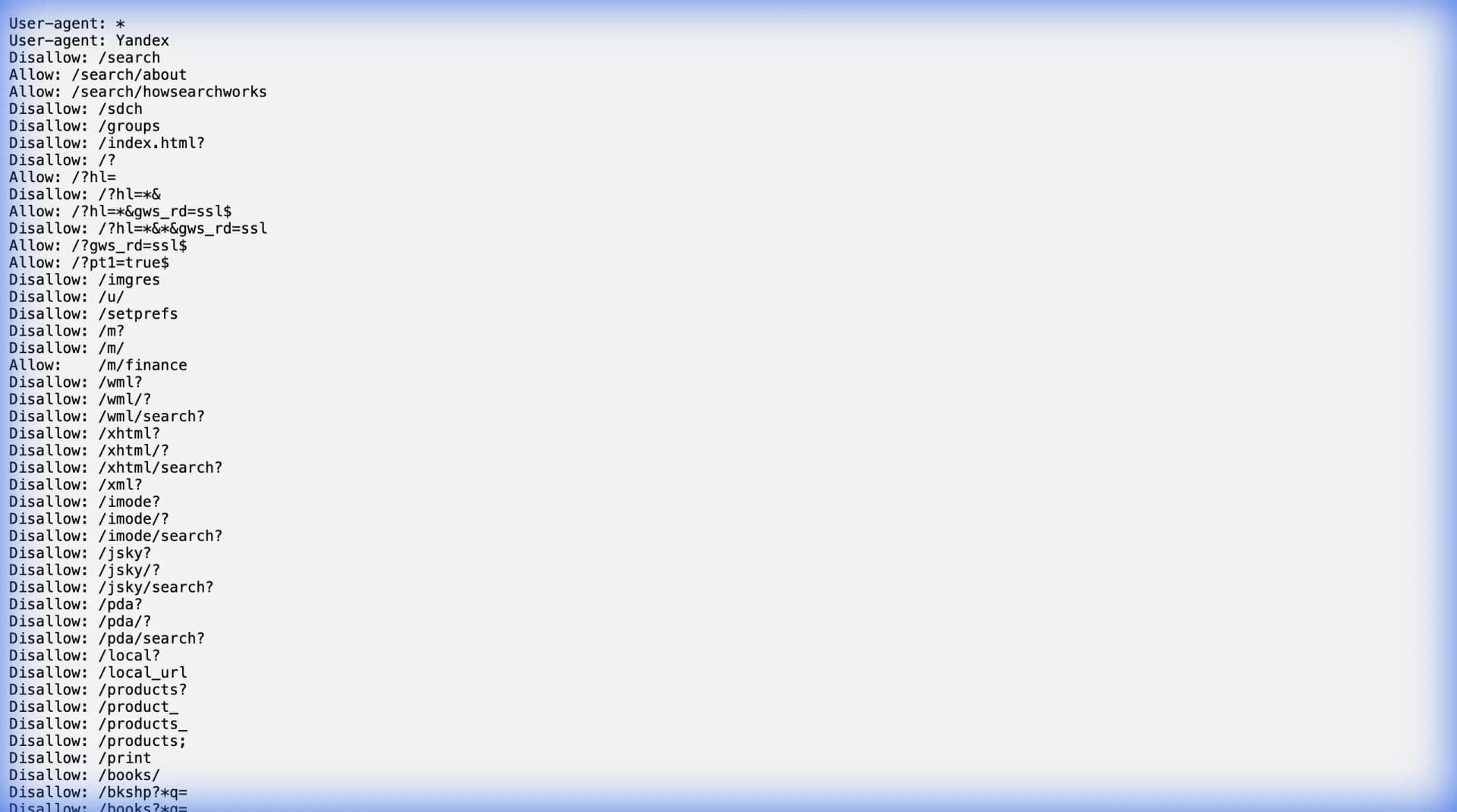
Treat public signals as part of your decision, even when they are not absolute legal barriers. The most obvious example is robots.txt. RFC 9309 standardized the Robots Exclusion Protocol in 2022 and describes it as a way for service owners to communicate how automated clients may access content. It also states clearly that these rules are not access authorization.
That distinction matters. robots.txt is not a lock, but it is still a strong signal about operator expectations. If a site disallows the path you want, pause and ask whether there is a lower-friction route such as an API, public export, partnership, or narrower target page.
The same logic applies to login walls, rate limits, paywalls, and technical barriers. If the workflow depends on bypassing access controls or pretending to be something you are not, it is already outside what most businesses should call responsible.
2. Define the business purpose before collecting data
Ethical scraping starts with purpose limitation. Write one sentence that explains why the data is needed, who will use it, and what decision it supports.
Good example: collect public SKU prices from 15 competitor category pages every weekday morning so the merchandising team can spot significant price shifts.
Weak example: scrape as much category data as possible in case product, sales, or finance wants it later.
The first purpose gives you boundaries. The second invites sprawl. Purpose is what lets you reject fields, limit crawl scope, and choose a retention period that makes sense.
3. Minimize fields, volume, and frequency
A narrow extraction is easier to defend than a broad one. If you only need job title, company, and public location for labor market analysis, do not also collect profile photos, personal posts, and every external link on the page.
Minimization also applies to time and frequency. You may need one weekly snapshot, not an always-on archive. You may need 500 rows, not 50,000. This is where ethics directly reduces operational drag, because smaller datasets are cheaper to validate, easier to store, and safer to delete.
If your team struggles with this discipline, use the same checks you would use for output quality. Our Data Validation Checklist for Scraped Data is a good companion because bad collection habits and bad data quality usually appear together.
4. Treat public personal data as a higher-risk category
"Public" does not mean consequence-free. On October 28, 2024, the UK ICO and other privacy regulators published a follow-up statement on data scraping that emphasized two relevant expectations: protect personal information against unlawful scraping, and make sure any permissible scraping is done lawfully and under strict terms. The point is simple. Public visibility does not erase the need for judgment.
If a project touches names, profile URLs, emails, job histories, photos, or other person-level data, use a higher bar. Narrow the purpose. Reduce fields. Review retention. Limit who can access exports. Decide what you would do if someone asked where the data came from or requested deletion.
This is also where many businesses should slow down and escalate. Some projects are still appropriate. Others look acceptable only until someone maps the data subject, the downstream use, and the scale.
5. Preserve accuracy and context
A technically correct scrape can still be misleading. A salary range may be stale. A company headcount might reflect one page variant. A profile can be incomplete or parody. If you strip the data from its context and push it into decision-making systems, the harm is not theoretical.
The OECD Due Diligence Guidance for Responsible AI, published in February 2026, recommends data quality reviews and privacy-preserving, responsible data governance approaches. That advice is directly useful for scraping teams. Review samples manually. Record extraction date and source URL. Flag inferred fields. Do not merge uncertain records as if they were authoritative.
Ethics gets much easier when the dataset carries enough context to challenge it.
6. Put human review on sensitive actions
Do not let scraped data trigger sensitive business actions without review. If the export feeds outreach, compliance escalation, lead scoring, watchlists, or AI-generated recommendations, add a human checkpoint before execution.
This is not bureaucracy. It is how you catch the obvious problems:
- the profile belongs to the wrong person
- the page changed and the scraper shifted columns
- the data is old but still looks fresh in a dashboard
- a field that seemed harmless becomes sensitive in combination with others
Human review is especially important when teams move fast with automation tools. The faster the workflow, the more valuable the pause point becomes.
7. Keep load and interaction proportional
Ethical scraping should not degrade the systems it depends on. Respect rate limits, spread jobs sensibly, and avoid bursts that look nothing like normal use.
This is partly courtesy and partly self-preservation. Aggressive collection invites anti-bot defenses, blocks, and brittle workarounds. A calmer pace usually produces more stable extraction and less conflict with site operators. If you need a refresher on how sites detect abuse, see Website Anti-Bot Measures Explained.
Browser-native tools help here because they keep the workflow closer to the way the site is actually rendered and used. They are not a license to ignore boundaries. They are a better surface for working carefully.
8. Build a stop, fix, and delete path
Every ethical scraping workflow needs an exit strategy. Decide in advance:
- how long the data stays useful
- who can approve changes in scope
- how errors get corrected
- what triggers deletion
- who can pause the workflow if the risk profile shifts
Without this, even a well-scoped project drifts into a semi-permanent archive nobody owns. The ethical problem is not only collection. It is the absence of a clean way to stop.
Why browser-native workflows help
Ethics is easier to maintain when the collection process is visible. Hidden scripts tend to encourage overcollection because only one person understands how they work. Browser-native workflows are easier to audit because teammates can see the page, see the selected fields, and review the export logic in context.
That does not remove the need for judgment, but it lowers the odds of accidental sprawl. It also makes retraining easier when the site changes or a stakeholder asks for a narrower extraction.
Lection fits this model well because it keeps extraction close to the browser tab where the work starts. Teams can inspect the page, define a schema, and export structured data without building a private scraping stack first. The practical upside is not only speed. It is visibility, reuse, and cleaner governance. If you are weighing rollout tradeoffs, the features overview and pricing page show where browser-native extraction can stay lightweight.
Troubleshooting and edge cases
The site has no robots.txt. Is everything fair game?
No. Missing robots.txt means there is no published rule file, not that the operator welcomes every type of automated collection. You still need to consider purpose, personal data, site terms, system load, and whether an API or export exists.
The data is public, so why slow down?
Because public data still has context. A public job listing is not the same as a public personal profile. A public review page is not the same as a public contact directory. Ethical scraping asks what happens after collection, not only whether the page can be seen.
Sales wants every field "just in case"
This is usually a sign that the purpose is underdefined. Ask which specific action each field supports. If nobody can answer, leave it out. Optional fields accumulate risk faster than they accumulate value.
When should you walk away from a scrape?
Walk away when the project depends on bypassing access controls, collecting sensitive personal data without a strong reason, or creating a dataset you would struggle to explain to the people affected by it. Walking away is sometimes the most efficient decision because it prevents months of downstream cleanup.
A lightweight ethics review your team can actually use
Before launching a new workflow, ask these six questions:
- What exact decision or process does this data support?
- Are we collecting only the fields needed for that purpose?
- Would the site owner or data subject find this use surprising?
- Are we scraping at a pace that avoids unnecessary strain?
- Can a reviewer trace each row back to its source and extraction date?
- Do we know how to pause, correct, or delete the dataset later?
If two or three answers are fuzzy, the workflow is not ready. Tighten scope first. Automation is easy to add after the decision quality improves.
Conclusion
Ethical scraping is not about making data collection slow or timid. It is about making it proportionate, accurate, and explainable before it scales.
The best teams do not ask only whether a scrape is possible. They ask whether it is necessary, whether the field list is defensible, and whether the downstream use matches the original purpose. That mindset leads to better data and fewer surprises.
Ready to start scraping? Install Lection and extract your first dataset in minutes.