The most promising directory ideas are rarely the biggest lists on the internet. They are focused answers to a recurring question: who can help me with this specific need, in this specific place, under these specific conditions?
That focus creates a better starting point for revenue. A directory with 200 carefully described providers in one useful category can be more valuable than a directory with 20,000 generic listings and no clear reason to return. The operator can learn what visitors compare, what businesses are willing to pay for, and which fields need to stay current.
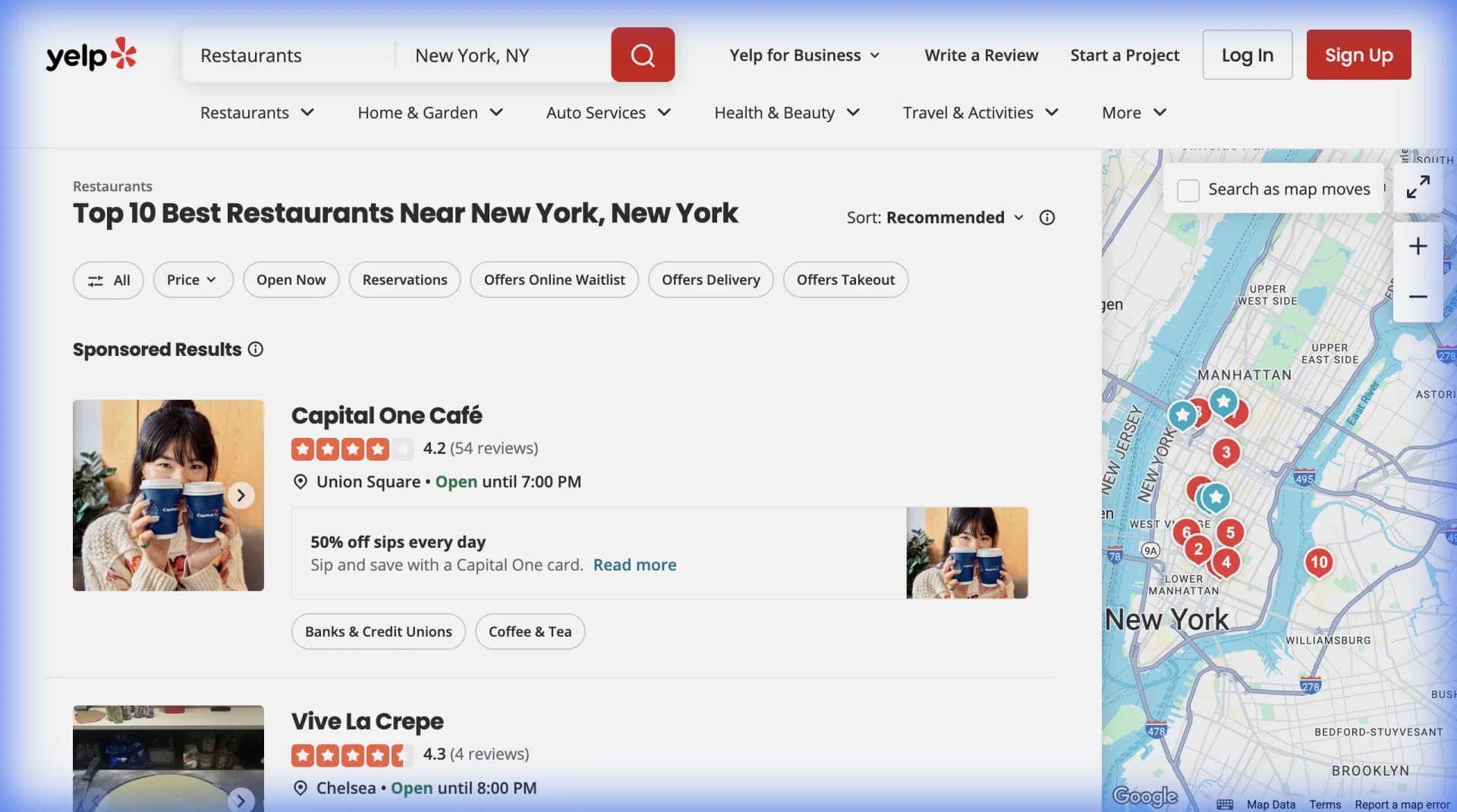
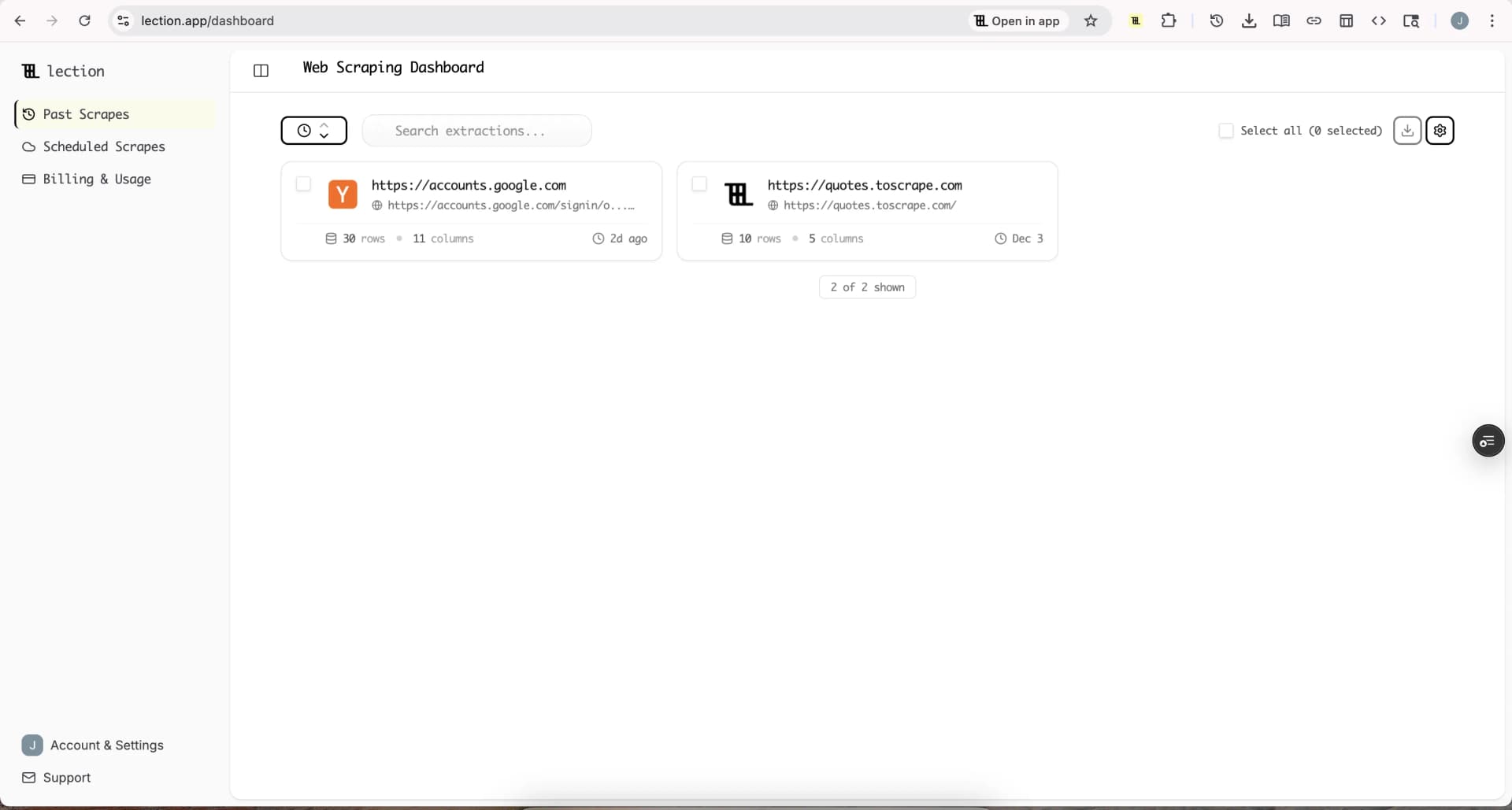
Lection is the AI-native option for fast, accurate scraping right in your browser. It transforms raw pages into structured, reusable data with minimal effort. That can help a directory founder collect an initial market map, check source pages on a schedule, and spend more time improving the product instead of rebuilding a one-off copy-and-paste process.
What makes a directory niche worth building?
A good niche has three qualities. People need to make a choice, the available information is fragmented or difficult to compare, and the businesses or organizations in the category have a reason to be discovered by new customers.
The niche should also be narrow enough that you can add judgment. A list of “all businesses in a city” is difficult to differentiate. A directory of wheelchair-accessible cafés with verified entrance details, a directory of bilingual estate attorneys in one region, or a directory of studios with beginner-friendly pottery classes gives you a sharper promise.
Before building, score an idea against these questions:
- Is the visitor's decision expensive, urgent, repeated, or emotionally important?
- Can you define useful fields beyond name, address, and phone number?
- Are the listings discoverable from public pages or other permissioned sources?
- Can you verify enough of the data to earn trust?
- Is there a realistic paying customer, not only a large audience?
The last question matters most. Traffic is useful, but a smaller audience with a clear commercial intent often produces a healthier directory business.
Which niche directory ideas have the clearest path to revenue?
The following ideas are starting points, not guaranteed business plans. Each becomes more defensible when you add a local boundary, a professional audience, a verification standard, or a workflow that a generic directory does not provide.
1. Specialized home services
Build a directory for a specific property problem, such as historic-home contractors, heat-pump installers, flood remediation companies, or apartment move-out cleaners. These categories have high-intent searches and meaningful differences in license, service area, emergency availability, and project type.
Useful fields might include license or certification links, neighborhoods served, project minimums, emergency response, insurance information, and the date each record was last checked. Revenue can come from paid profiles, qualified lead requests, or sponsored placement that is clearly labeled.
2. Accessible and inclusive venues
An accessibility directory can serve people who need more detail than a generic review platform provides. Track entrance type, step-free routes, restroom access, quiet hours, seating, parking, and the source or date of each claim. Let venue owners suggest corrections, but keep an editorial review process so paid placement does not become paid certification.
This type of directory can earn from featured profiles, partnerships with local organizations, and sponsorships from businesses that want to reach a defined community. Its strongest asset is structured information that is difficult to find in one place.
3. Professional services for a defined audience
Instead of listing every consultant, lawyer, accountant, or agency, focus on a buyer and a problem. Examples include accountants for independent medical practices, immigration attorneys serving a particular language community, or agencies experienced with nonprofit fundraising.
Capture service specialization, geography, pricing format, client size, languages, case-study links, and availability. A clear submission form can become the first paid product. A more mature version can offer a lead-routing fee or a subscription for profile management and analytics.
4. Local classes and recurring activities
Parents, newcomers, and hobbyists often compare classes by schedule, age range, skill level, cost, accessibility, and registration deadline. A directory of weekend robotics programs, adult language classes, or outdoor clubs can become valuable when it answers those constraints directly.
The data changes frequently, so freshness is part of the product. Collect class pages on a schedule, retain the last checked date, and separate confirmed future sessions from an old program description. Monetization options include promoted listings, registration referrals, and paid calendar placement.
5. Independent food and drink trails
A city-specific directory of bakeries, coffee roasters, tasting rooms, or specialty grocers can work when it has a point of view. Do not reproduce menu text at scale and call that a product. Add useful curation, such as roast style, dietary options, reservation requirements, neighborhood, transit access, or whether a location is suitable for remote work.
Businesses may pay for enhanced profiles or seasonal sponsorships. Readers may also support a well-curated guide through memberships, events, or a newsletter. If the ranking is influenced by payment, label that relationship clearly and keep editorial recommendations distinct.
6. Grants, accelerators, and startup resources
Founders and researchers regularly compare programs by geography, sector, stage, application window, check size, cohort dates, and eligibility. A structured directory can save time if it keeps deadlines and application links current.
This niche can support sponsored program pages, premium research access, or referral partnerships. It also rewards a careful change log because an expired deadline is more damaging than a missing optional description. Public program pages can provide discovery, while the directory's value comes from normalization and verification.
7. Sustainable suppliers and services
A directory for refill shops, repair businesses, certified materials suppliers, or local recycling services can serve both consumers and procurement teams. The key is to define what “sustainable” means for the directory. Use certification links, accepted materials, delivery area, minimum order, and verification date instead of relying on vague labels.
Revenue can come from supplier subscriptions, buyer introductions, sponsored educational content, or paid data exports. Avoid implying that a listing is an endorsement. A source link and a transparent verification policy make the directory more credible.
8. Event and production vendors
Wedding planners, conference organizers, and local event producers compare venues, caterers, photographers, rental companies, and AV providers under time pressure. A directory becomes more useful when it captures capacity, service radius, lead time, pricing model, insurance, and date availability.
Paid profiles and lead generation are obvious models, but a private planning workspace can be more defensible than a public list alone. Start with one event type or region, then expand after you understand which fields actually influence a booking.
How should you choose a monetization model?
Match the model to the value you create. A paid listing works when a business receives visibility and can maintain a useful profile. A lead fee works when the directory sends a genuine inquiry and can explain what counts as a qualified lead. A subscription works when users return for changing information, saved searches, alerts, or exports.
Paid profiles and featured listings
Offer a free baseline profile and charge for additional photos, service areas, scheduling links, analytics, or priority presentation. Keep “featured” visually distinct from an editorial ranking. The buyer should understand what payment changes.
Lead generation
Route a request to one or more relevant providers. Define the category, location, and timing fields that make a lead useful. Do not sell the same contact repeatedly without making that clear. A small number of relevant introductions is usually more valuable than a large volume of vague submissions.
Memberships and subscriptions
Charge visitors for alerts, saved comparisons, downloadable datasets, or a professional research layer. Subscription revenue only works when the directory changes often enough or saves enough time to justify returning. Stripe's documentation on recurring payments and subscriptions is a useful reference for the mechanics, but the business case comes from your users' repeated need.
Sponsorships and partnerships
A niche audience can be valuable to adjacent companies, local associations, and event organizers. Create a simple sponsorship page that explains placement, audience, duration, and reporting. The FTC's advertising guidance for small businesses emphasizes clear disclosures, so label paid relationships close to the relevant recommendation or placement.
Why does the standard directory approach fail?
The standard approach is to collect a large list, publish every row, add generic city pages, and wait for search traffic. It fails in three predictable ways.
First, the directory has no reason to be trusted. A visitor cannot tell when a listing was checked, whether a business actually serves the area, or how a ranking was produced. Second, the data decays immediately. Hours, eligibility, inventory, and application dates change even when the page design stays the same. Third, thin pages create a poor experience. Google says its spam policies treat scaled content that adds little value as a problem, regardless of whether it was produced by automation, people, or both.
Automation should reduce repetitive collection, not manufacture hundreds of interchangeable pages. Add original filters, useful descriptions, transparent sources, and a review policy. A smaller set of reliable pages gives you a stronger base for revenue and retention.
How can you validate an idea before building it?
Start with a narrow sample of 50 to 100 records. Use Lection to extract the fields you believe a buyer will compare, then review the output manually. Notice which fields are missing, which sources disagree, and how often pages change. If the data is hard to verify, that difficulty may become a differentiator, but it also raises operating costs.
Next, speak to both sides of the marketplace. Ask visitors what they need to decide. Ask listed businesses which inquiries are valuable and which profile details they would keep current. A directory that only satisfies the operator's idea of completeness may never become useful to either side.
Finally, publish a small, honest version. Include the source or last-checked date, make corrections easy, and measure searches, outbound clicks, submissions, and repeat visits. Do not treat a pageview as proof of demand. A request for a quote, a saved listing, or a business that asks to update its profile tells you more.
What data workflow keeps the directory credible?
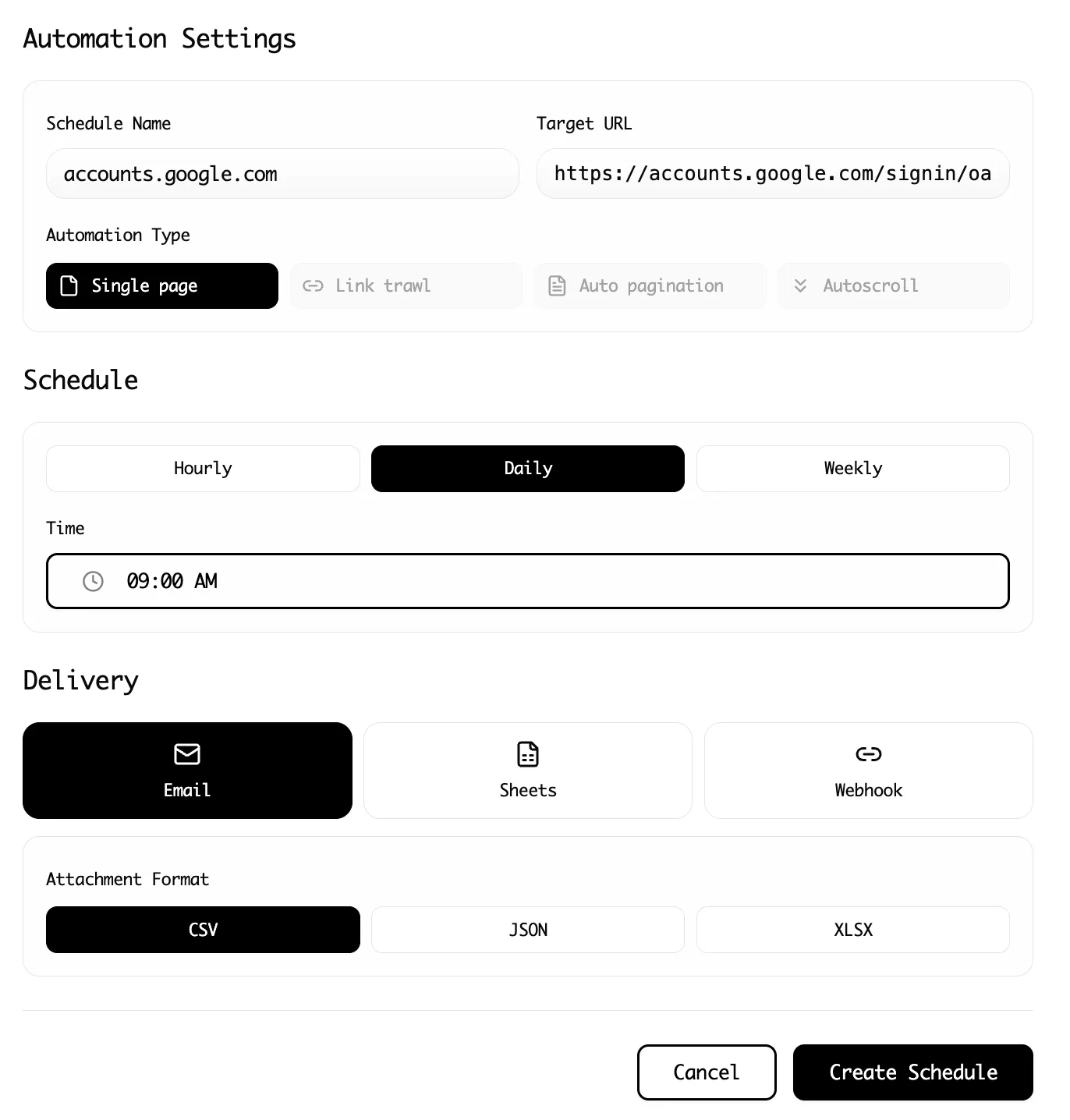
Define a stable record schema with a canonical URL, category, location, source, last checked date, and status. Normalize names and phone numbers before deduplication. Keep the previous accepted record when a run suddenly returns far fewer rows, and route large changes to review.
Google's LocalBusiness structured data guidance explains how pages can describe details such as hours, departments, and reviews. Structured data does not guarantee a search feature, and it cannot make inaccurate directory data trustworthy. Use it only when the visible page supports the same information.
For a fuller operating pattern, see how to keep directory data fresh. The goal is not to refresh every field every hour. It is to make the age, source, and confidence of each important field understandable.
A practical first-year plan
In month one, choose one audience, one geography, and one decision. Build 50 strong records and test the fields with real users. In months two and three, add a correction flow, freshness checks, and a clear free profile. Only then test a paid profile or a small sponsored placement.
By month six, you should know which pages earn clicks, which categories produce inquiries, and which source changes create the most maintenance. Use that evidence to expand the dataset or add a subscription. Expansion should follow a proven workflow, not replace the work of finding product-market fit.
The directory ideas with the best chance of making money are the ones where accuracy and context are part of the offer. Pick a narrow problem, collect evidence carefully, show readers what is current, and charge for a result that matters. Data extraction can make the work repeatable, but trust is what makes the directory worth returning to.
Ready to start scraping? Install Lection and extract your first dataset in minutes.