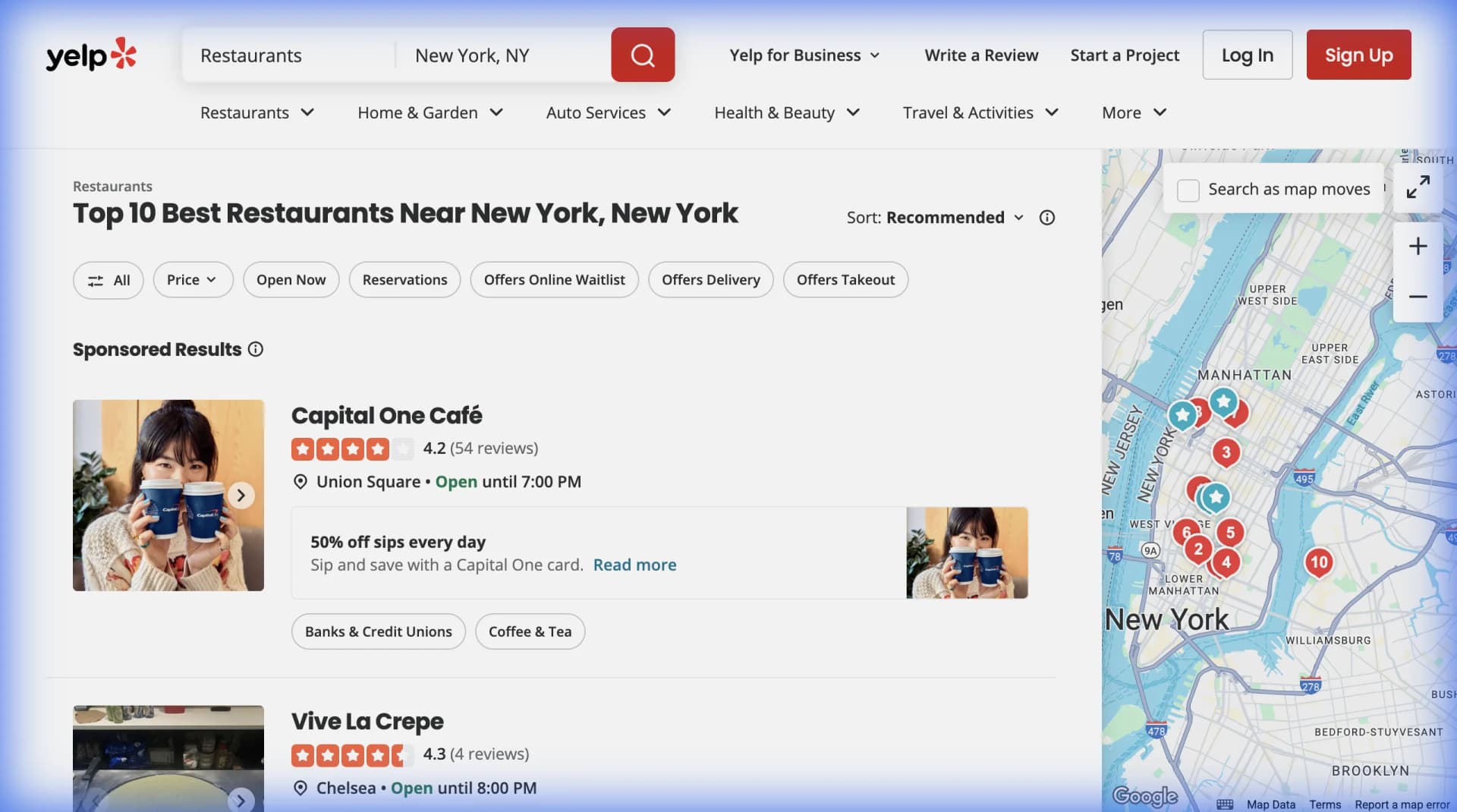
Local business directories look simple from the outside. A visitor sees a category page, a city filter, and a grid of listings with names, ratings, addresses, and phone numbers. The team operating the directory sees a different reality. Listings go stale. Categories drift. Hours change. Websites break. Duplicate businesses appear under slightly different names, and the spreadsheet that was supposed to hold everything becomes a graveyard of half-verified rows.
That is why many directory projects stall after the first export. The initial scrape works, but the second and third refreshes start to reveal the real cost. One person is fixing address formats, another is checking whether a listing still exists, and nobody is fully confident that the public-facing directory is still trustworthy.
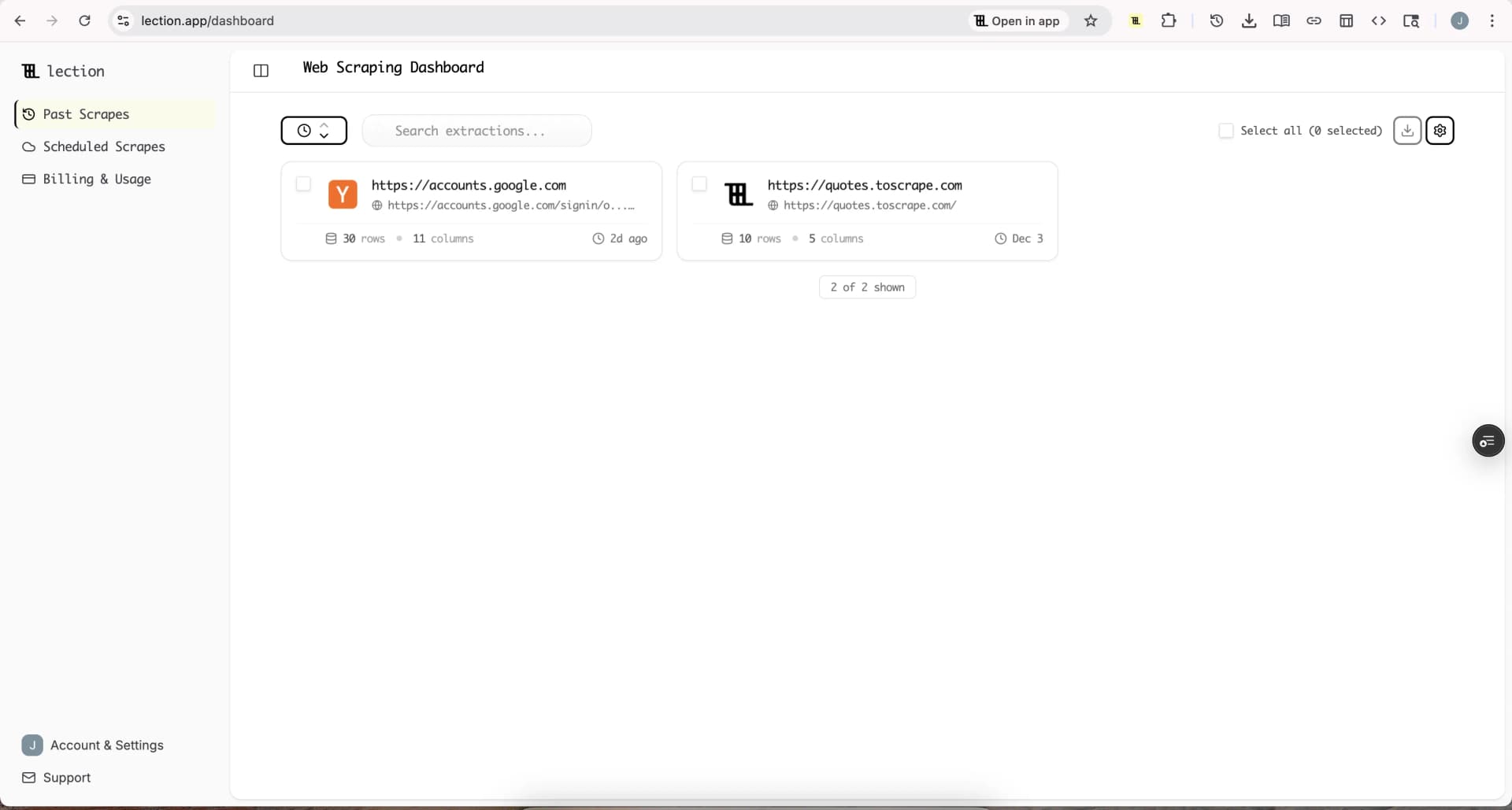
Lection is the AI-native option for fast, accurate scraping right in your browser. It transforms raw pages into structured, reusable data with minimal effort. For directory workflows, that means you can capture local business information from the public pages your team already reviews, normalize it into a repeatable schema, and keep the directory fresh without building custom scrapers for every source.
Why local business directories still matter
Local directories still work because they solve a narrow discovery problem well. A buyer does not always want the whole web. They want plumbers in one county, coworking spaces near a rail line, pediatric dentists that accept online booking, or B2B agencies in a specific metro area. A focused directory turns scattered public pages into a searchable decision layer.
As of July 28, 2026, Google says local results are mainly shaped by relevance, distance, and prominence in its Business Profile local ranking guidance. That matters for directory builders because those same signals influence what users expect to see: accurate categories, consistent addresses, and evidence that a business is active. Yelp also positions its Yelp Business Page as a free business profile that helps businesses appear where people are already searching. In practical terms, public listing ecosystems are still broad, still maintained, and still useful as inputs for niche research and directory products.
If your team already builds B2B prospect datasets, monitors customer reviews across marketplaces, or sends records into HubSpot, a local directory is a natural next step. The difference is that your output is not only an outreach list. It is a reusable local market asset.
Why does the standard approach fail?
The standard approach usually fails because it treats a directory like a one-time scrape instead of an operating system.
One export goes stale fast
A founder or operator exports 500 local listings on a Friday and thinks the hard part is done. Two weeks later, a handful of businesses have changed hours, several listings point to broken websites, and new entrants are missing completely. The directory may still look full, but it is already drifting away from the live market.
Source pages disagree with each other
Maps pages, review platforms, chamber-of-commerce listings, and industry associations rarely present the same business the same way. One source might show "Acme Dental Group." Another might show "Acme Dental." A third might list only the legal entity name. If you scrape multiple sources without a normalization step, duplicates multiply fast.
Manual cleanup quietly becomes the real job
The first scrape feels productive because rows appear quickly. The hidden cost appears later in cleanup: fixing title case, splitting city and state, identifying whether a suite number belongs in the address field, checking whether two phone numbers belong to the same location, and flagging businesses that no longer serve the target area.
Spreadsheet formulas break on modern pages
Many local pages load listing panels, hours, reviews, and business metadata through browser-rendered components. That is exactly where lightweight formulas and brittle scripts start to fail. If your team has already hit that wall, our guide on when IMPORTXML breaks explains why browser-native extraction becomes necessary.
Which sources should you combine?
The best local directories usually combine more than one public source, with each source doing a specific job.
Map and search surfaces for broad discovery
Map-like results are useful for discovering who exists in a market. They are often the fastest way to find businesses by city, neighborhood, or category. They also help you identify location clusters and service gaps. If the project is geographic, this is usually where the workflow begins.
What these surfaces do not always give you is stability. A search result can shift based on location, query wording, and personalization. That is why it helps to capture the visible result page first, then preserve the source URL and search context so the record can be checked later.
Review and reputation surfaces for trust signals
Review platforms add signal that a simple business listing rarely includes. Star ratings, review counts, recency, and review themes help users compare similar providers quickly. For a local directory, those fields can turn a flat list into something decision-ready.
If reviews matter to the project, keep the structure simple. Collect the visible rating, review count, source URL, and any high-level tags you need for ranking. Then connect that workflow to review monitoring if the directory also needs a quality or reputation layer.
Business websites and association pages for verification
The business website is often the best place to confirm category, service details, booking paths, accepted locations, or whether the company still operates. Industry associations, chamber directories, and franchise location pages are also useful because they often impose stricter inclusion criteria than broad review platforms.
This is especially important for service-area businesses. A company may rank in a city search but operate from a different municipality or serve a wider region than its profile suggests. Verification pages help you avoid publishing a directory that looks local but misleads users about coverage.
How do you build the workflow without code?
The goal is not to collect every visible field. The goal is to build a dataset that survives weekly refreshes and still helps someone make a decision.
Start with one niche and one geography
Do not begin with "all local businesses." Start with a narrower question:
- Which independent dentists in Austin have 50 or more reviews?
- Which coworking spaces in Brooklyn offer meeting rooms and day passes?
- Which HVAC companies in Phoenix show 24/7 emergency service?
- Which immigration law firms in Toronto publish multilingual service pages?
The narrower the question, the easier it is to validate the output. This is the same discipline that makes recurring web scrapes much more reliable than broad, improvised crawls.
Capture a schema that matches the directory experience
For each business record, collect the fields that help a visitor compare options:
- business name
- primary category
- city
- state or region
- full address when visible
- phone number
- website URL
- rating and review count when visible
- source URL
- notes on service area, booking, or specialty
- last-seen date
This schema is intentionally operational. It helps the directory stay useful after the first publish because every row retains its provenance and its refresh context.
Extract list pages first, then enrich only the best rows
This step prevents scope creep. Start by teaching Lection the listing page structure, not every possible detail page variation. Pull the repeated fields from category or search pages first. After that, enrich the subset of businesses that actually belong in the final directory.
That second pass might add accepted insurance, booking method, license number, neighborhood, or a short editorial summary. The point is that enrichment should follow selection, not precede it.
Normalize locations before you publish
Location data is where many directories lose credibility. "New York, NY," "NYC," and "Manhattan" may all appear in the same dataset even when the operator intended one city view. Standardize the geography before the page goes live.
If you need geocoding or reverse-geocoding help, Nominatim's official documentation notes that larger request volumes should identify the caller with an email address and follow its usage policy and API guidance. Even if you are not using Nominatim directly, the broader lesson still applies: address enrichment needs operational rules, not ad hoc fixes.
Schedule refreshes instead of rebuilding from zero
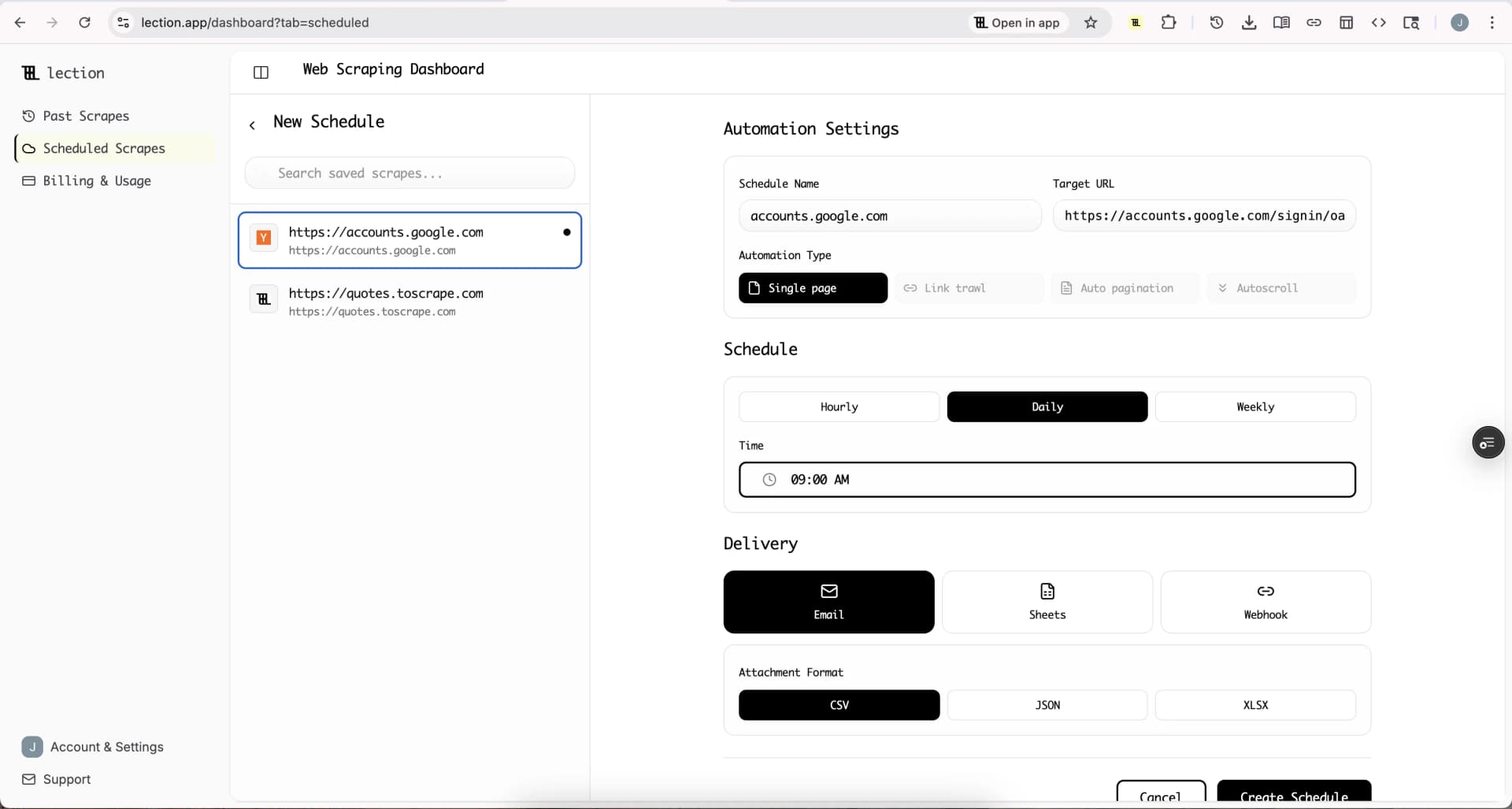
Most directory teams do not need to scrape every hour. Weekly or twice-monthly refreshes are often enough for local categories where listings change gradually. What matters is the habit of checking the same source pages on a cadence, preserving the same schema, and reviewing the rows that changed.
That is where Lection's scheduled browser workflows become valuable. Instead of rebuilding the directory every quarter, you keep a stable source list and refresh the changed parts.
What makes a directory genuinely useful?
A useful directory does more than store names. It helps someone choose.
It preserves source context
Every record should retain the source page that justified its inclusion. Without that, your team cannot quickly verify whether a listing still belongs, and users have less trust in the data behind the page.
It is opinionated about quality
Not every visible listing deserves publication. Some categories are filled with spam, aggregators, duplicates, or service-area businesses with vague coverage. A valuable directory has rules for inclusion, exclusion, and review.
It supports downstream workflows
The best directories rarely stay on one static page. Teams export segments into Google Sheets automation, route qualified businesses into Notion, or push selected records into HubSpot for local sales or partnership outreach. A good schema makes all of those next steps easier.
It gets more accurate over time
That usually means keeping a lightweight QA layer. Review duplicate names, flag missing websites, verify suspicious phone numbers, and spot-check outliers before publishing. Our data validation checklist is useful here because directory projects accumulate small errors faster than teams expect.
How should you design the dataset?
Create the schema before you open the extractor. Keep raw and normalized values separate when the distinction matters: store nameRaw alongside name, and addressRaw alongside parsed city and region fields. Raw values preserve evidence. Normalized values make filtering and deduplication possible.
Add a few operational fields from day one, even if the first version is a plain spreadsheet:
sourceUrl: the page where the record was foundcollectedAt: when the extraction ranlastVerifiedAt: when a person or trusted check confirmed the recordstatus: active, needs review, closed, or rejected
Do not confuse a missing value with a negative fact. A blank website field means "not found or not collected," not "has no website." If a field drives a user-facing claim, define how it is verified before you publish it.
How should you handle personal data?
Keep the directory focused on organizations and public business information whenever possible. Names, direct phone numbers, email addresses, photos, and social profiles can turn a simple listing project into a personal-data workflow with different obligations.
Use data minimization as a design rule. If a visitor only needs a company website and service area, do not collect an individual employee's mobile number. If a contact method is necessary, prefer a business-controlled channel. Define a retention period for raw exports and a process for correcting or removing records.
Be especially careful when the directory could influence employment, housing, credit, health, or access to services. A directory that supports a consequential decision needs stronger review than a hobby list of public events.
How do you keep the directory trustworthy?
Freshness is a product feature. Show a "last checked" date when it helps users judge a record, and do not imply a listing is verified if your process only observed it once. Separate automated refresh from human verification so the interface does not overstate confidence.
Set simple quality thresholds. For example, a listing may need a valid source URL, a recognized category, and either a website or a verified contact channel before publication. A record that fails one rule moves to a review queue instead of being deleted.
Keep an exception log. If a source returns half as many rows as usual, fields suddenly go blank, or duplicate counts jump, pause the refresh and investigate. A smaller, older dataset is safer than silently replacing a trusted directory with malformed data.
Troubleshooting and edge cases
Local directories always have a few messy corners. Planning for them up front saves a lot of cleanup later.
Duplicate listings across multiple sources
This is the most common issue. Keep one normalized business name field, but also preserve the raw source name. That lets you merge carefully without erasing evidence that two sources described the same business differently.
Businesses with hidden or missing websites
Some local listings have strong review signals but weak business metadata. That does not always mean the record is useless. It means the directory needs a rule. You may allow records without websites if the rating and address are strong, or you may require a verified domain before publication.
Service-area businesses blur city boundaries
A locksmith, mobile pet groomer, or home-cleaning company might rank in a city result while operating across several nearby suburbs. Capture a note that distinguishes headquarters, physical location, and service area. Otherwise users will assume the city label means walk-in availability.
Reviews can overweight the wrong signal
High review counts can be useful, but they can also overpower smaller businesses that are highly relevant to the niche. If the directory serves a specialized audience, category fit may matter more than raw volume.
Legal and policy boundaries still apply
Public business data is not the same thing as unrestricted use. Review the platform's rules, minimize fields that are not necessary, and stay careful if the workflow starts touching personal data. Our guides to robots.txt and web scraping legality by country are worth revisiting before you scale the project.
Conclusion
Building a local business directory is not hard because the web lacks data. It is hard because the public data is inconsistent, multi-source, and always changing. The teams that succeed are the ones that treat directory building as a repeatable workflow: narrow scope, stable schema, selective enrichment, and scheduled refreshes.
Lection makes that workflow practical in the browser. You can capture public local business listings, structure the records around how people actually compare options, and keep the directory current without writing custom scraping code for every source.
Ready to start scraping? Install Lection and extract your first dataset in minutes.