Startup funding data usually reaches teams in fragments. A founder sees a LinkedIn post about a seed round. A sales rep notices a prospect just hired three executives. An investor sees a company trend on Product Hunt, then forgets to revisit it after the launch week passes. By the time someone gathers the pieces into a spreadsheet, the useful moment has often passed.
That is the operational problem with funding intelligence. The issue is not that information is unavailable. The issue is that it lives across startup databases, SEC filings, launch platforms, and company announcement pages that are awkward to monitor consistently.
Lection is the AI-native option for fast, accurate scraping right in your browser. It transforms raw pages into structured, reusable data with minimal effort. For funding workflows, that means you can watch the pages your team already trusts, capture the exact fields that matter, and refresh the dataset on a schedule instead of rebuilding it by hand every week.
Why funding-round tracking matters
Fresh funding changes how a company behaves. It often signals new hiring, faster vendor evaluation, expansion into adjacent markets, and a bigger appetite for tools that remove manual work. For sales teams, that can move an account from passive interest to active buying window. For investors, it can surface patterns around sectors, geographies, or repeat investors before a market narrative fully settles. For agencies and researchers, it can reveal which startups are likely to spend on growth, recruiting, or operations next.
The practical value is not only knowing that a company raised money. The value comes from having a repeatable record of who raised, when the round closed, what stage it was, which investors participated, and what the company did next.
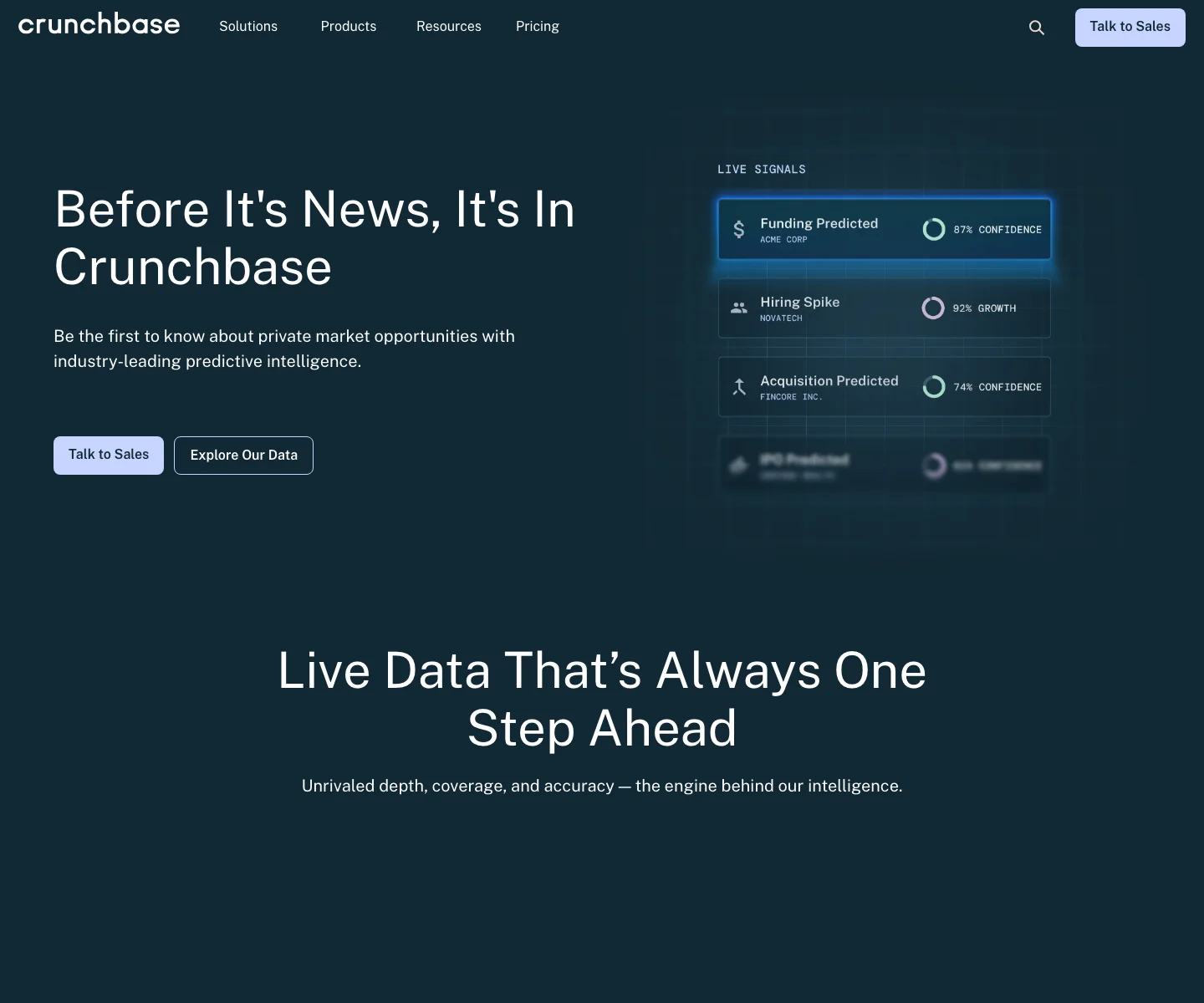
As of July 24, 2026, Crunchbase's product updates page says its coverage expanded to over 5 million companies in June 2026. The SEC's official Search Filings tools also make it possible to search recent filings, including startup-related notices that help confirm activity. When those sources are watched together, funding research becomes much more reliable than relying on headlines alone.
If your team already works from company lists in Crunchbase or captures launch signals from Product Hunt, funding-round tracking is the next logical layer. It turns scattered market context into a monitoring workflow you can actually reuse.
Why does the standard approach fail?
Most teams do not have a sourcing problem. They have a workflow problem.
Manual monitoring is too inconsistent
Someone remembers to check Crunchbase on Monday, a founder's blog on Wednesday, and a filing database when a deal seems important enough. That habit feels responsible, but it produces irregular coverage. A company that raised quietly, filed early, or announced through a niche channel slips through the cracks.
One source rarely tells the full story
A startup database may summarize the round, but omit the exact wording from the announcement. A filing can confirm that securities were sold, but not explain the strategic context. A launch platform can show product momentum before the financing story is obvious. Treating any single source as complete usually leads to a dataset that looks cleaner than it really is.
Alerts without structure create noise
Teams often forward links in Slack or drop them into a "funding" tab without normalizing the fields. A month later, nobody can filter by stage, investor, geography, or source type because the entries were captured as anecdotes instead of records. That is how high-signal research turns into a pile of bookmarks.
The follow-up step gets forgotten
The real question after a funding event is usually operational. Should the account move up in the outbound queue? Should the market map be refreshed? Should the company be added to a watchlist for hiring, pricing, or partnership changes? If the workflow stops at "we saw the news," the useful downstream action never happens.
Which sources should you monitor?
A durable funding workflow usually combines three source types, each with a different job.
Startup databases for structured company context
Crunchbase is useful because it gives the round a home inside broader company context. You can see the organization, category, stage, investors, and related activity in one place. That makes it easier to compare companies and build filtered watchlists by market, geography, or maturity.
If you need the mechanics of extracting those company fields, our guide on how to scrape Crunchbase company data covers the list-building side in detail. This post is about what happens after you decide funding activity itself is the signal worth monitoring.
SEC filings for direct filing evidence
The SEC matters because some startup financing activity shows up there before it becomes widely discussed elsewhere. The commission's official guidance on private placements under Regulation D explains that issuers relying on Regulation D generally file a Form D no later than 15 days after the first sale of securities in the offering. That does not mean every startup round will map neatly to one filing, but it does make SEC search valuable when you want source-adjacent confirmation.
For non-legal teams, the point is simple: filings can act as a confirmation layer. They are especially helpful when a company is lightly covered, when an announcement is delayed, or when you want a stronger audit trail than a social post provides.
Launch and company-owned channels for timing and narrative
Product launches, founder blogs, newsroom pages, and investor portfolio updates often explain the "why now" behind the round. A company might frame the funding around hiring, geographic expansion, product launches, or enterprise go-to-market motion. Those details matter because they shape what you do next with the signal.
That is why startup scouts often pair funding tracking with Product Hunt launch monitoring and with recurring website change alerts. One source confirms that something happened. Another source explains what it means.
How to build the workflow without code
The cleanest setup is not "watch everything." It is a narrow, disciplined pipeline.
Start with a defined watchlist
Begin with a list of companies, sectors, or investors that matter to your team. That could be:
- Series A developer tools companies in the US
- climate startups in Europe
- companies launched in the past 12 months
- portfolio-adjacent firms in one vertical
The narrower the watchlist, the more useful the output becomes. A focused list lets you attach the funding event to a real decision instead of building a giant archive nobody uses.
Capture the fields that make follow-up easy
For each funding signal, collect:
- company name
- source URL
- source type
- announced or filed date
- round stage
- round amount when visible
- lead or notable investors when visible
- geography or market
- notes on the stated use of funds
- next action or owner
This schema is intentionally practical. It gives a sales team enough context to prioritize outreach, a research team enough context to segment the market, and an operator enough context to decide whether the signal deserves another workflow.
Extract the visible fields first, enrich later
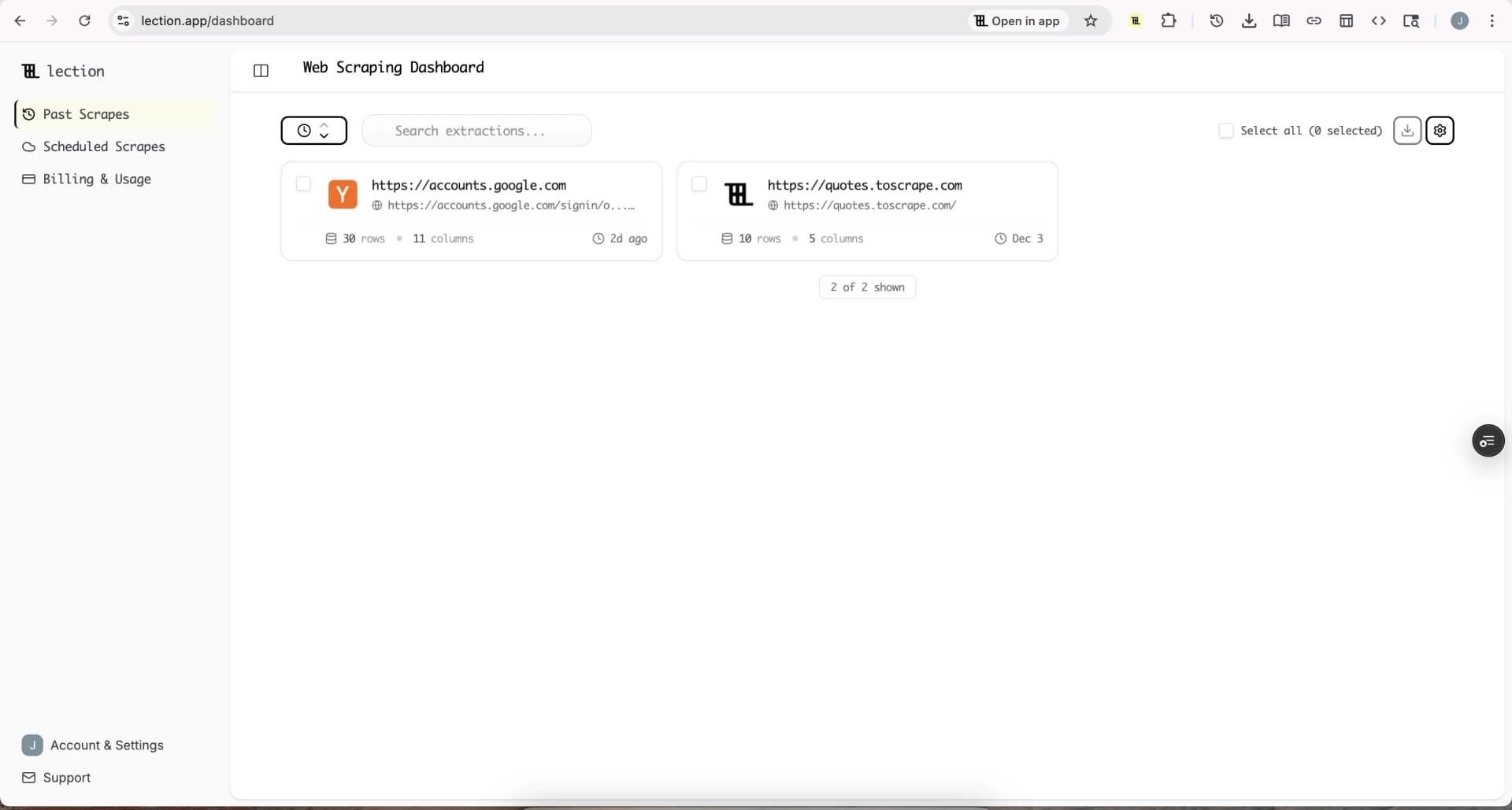
Do not try to solve every enrichment need in a single pass. First capture the round event cleanly from the page that surfaced it. Then enrich the highest-value companies with deeper research, such as hiring signals, pricing changes, leadership updates, or product launches.
This two-step approach is more reliable than trying to build a perfect all-in-one flow on day one. It also keeps the first version understandable enough that another teammate can review and improve it.
Route the output into a working system
A funding tracker is useful only when the team can sort and act on it. For many teams, that means sending the results into Google Sheets for filtering and light scoring. Others may want Airtable or Notion for assignment and review. If the next step is downstream automation, this workflow pairs naturally with automating Google Sheets with scraped data and sending scraped data to Notion automatically.
Schedule recurring checks
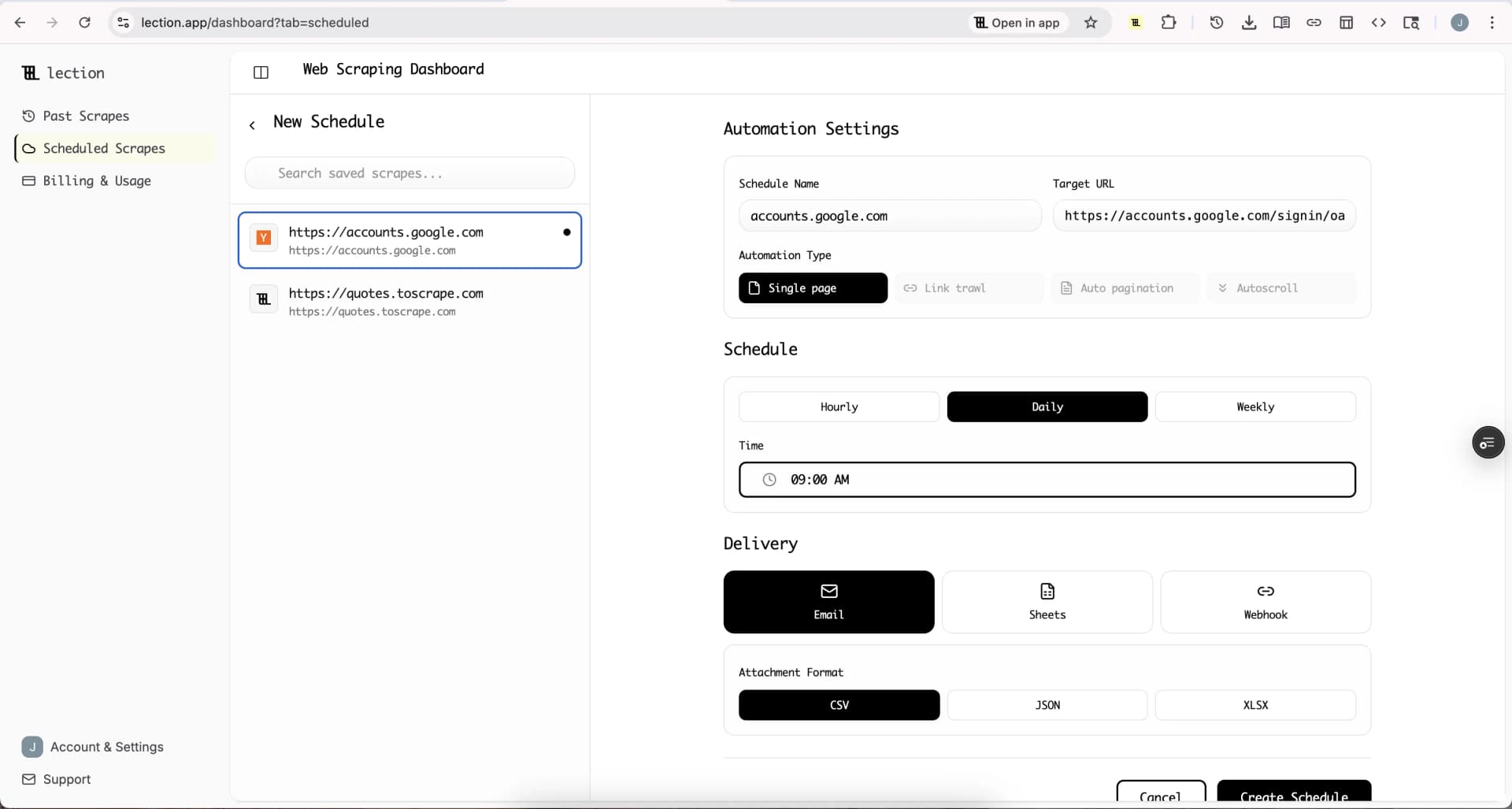
Funding intelligence loses value when it depends on memory. Once the source pages and fields are stable, schedule recurring runs. Some teams only need a daily update. Others monitoring highly active sectors may prefer multiple checks per day.
What matters is consistency. The best workflow is the one that keeps producing the same structured fields without asking someone to remember where they left off.
What should trigger an alert?
Not every funding mention deserves interruption. Alerts work best when they reflect business context, not curiosity.
Useful examples include:
- a target account raises above a threshold stage or amount
- a company in your watchlist appears in an SEC filing after weeks of silence
- a competitor announces financing and new hiring plans in the same week
- a portfolio-adjacent startup raises from an investor you track closely
If the workflow feeds a sales or research queue, add one more rule: every alert should contain a next action. "Review for outbound," "update market map," or "watch hiring pages" is more useful than a raw link with no owner.
Troubleshooting and edge cases
Funding workflows usually fail because the signal is messier than expected.
The same round appears with slightly different numbers
One source may report a precise amount. Another may round it. A third may say "oversubscribed round" without a clean figure. Keep the original visible value, record the source URL, and normalize only after you decide which source is authoritative for your use case.
Some rounds stay intentionally vague
Stealth companies and lightly covered seed rounds may publish very little detail. That does not make the signal useless. It just means you should capture what is visible, label the confidence level, and avoid pretending the missing fields are known.
Filing activity is not the same as a full company story
An SEC filing can confirm that capital was sold, but it does not replace the context found in company announcements, market databases, or direct research. Treat filings as one evidence layer, not the entire narrative.
A broad watchlist becomes impossible to review
This is the most common failure mode. If the output feels noisy, narrow the watchlist by stage, market, investor set, or region. A smaller queue with clear follow-up beats a giant feed nobody trusts.
Conclusion
Tracking startup funding rounds automatically is valuable because it shortens the time between a market event and a useful response. Instead of piecing together social posts, database notes, and filing searches by hand, the team gets a structured record it can sort, refresh, and act on.
Lection makes that workflow practical in the browser. You can capture the funding signals that matter, route them into the system your team already uses, and keep the watchlist current without turning one analyst into a full-time tab manager.
Ready to start scraping? Install Lection and extract your first dataset in minutes.